Home / Video lessons / Pretérito indefinido
This lesson explains the pretérito indefinido, also called pretérito perfecto simple: the tense used to talk about finished actions in a finished period of time.
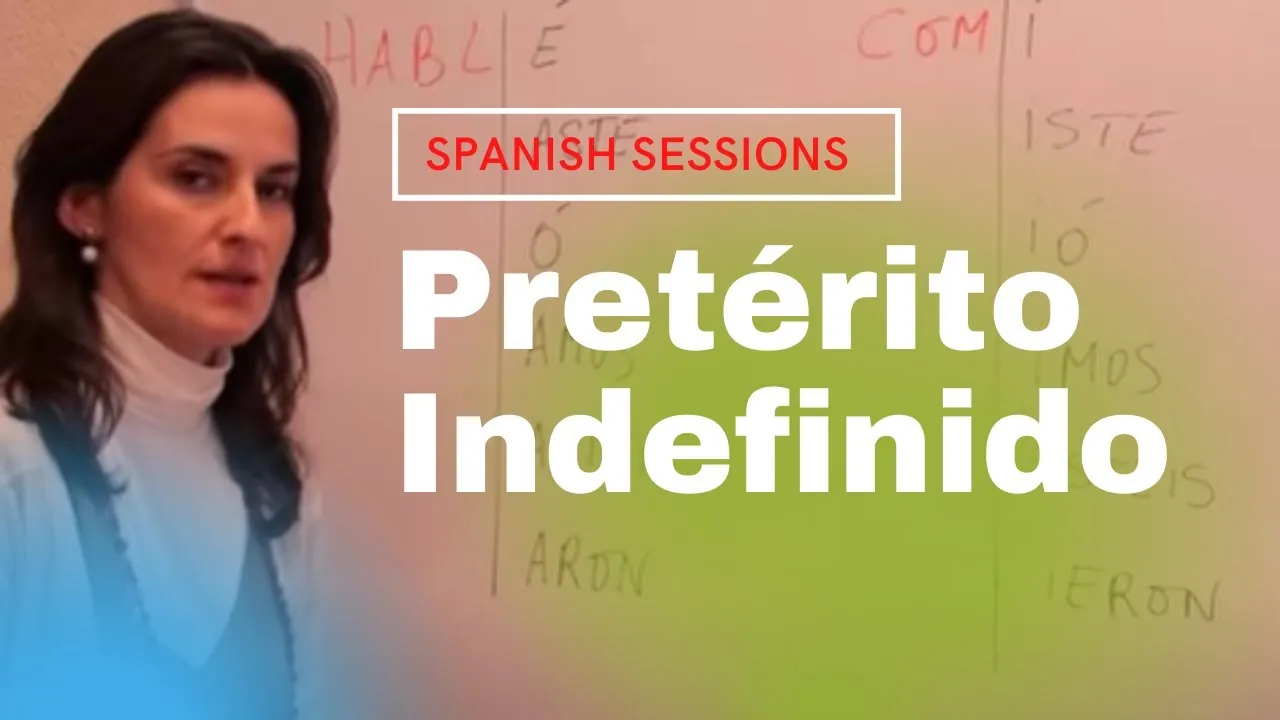
Learn the use of this verb tense in Spanish with this free Spanish lesson brought to you by Tilde Madrid Spanish school in Madrid
In Spain, use the perfecto for a time that is not over (hoy, esta semana: he comido) and the indefinido for a finished time (ayer, el año pasado: comí).
Ser and ir share the same forms in the indefinido: fui, fuiste, fue… The context tells you which one it is: Fui a Madrid (ir), Fue un día estupendo (ser).
Yes, in the first and third person singular of regular verbs: hablé, habló, comí, comió. Irregular forms such as tuve or hizo have no accent.
Part of Spanish Sessions, the YouTube channel of the teachers at Tilde Madrid — more than 3 million views.
Watch on YouTube