Home / Video lessons / Los verbos (I): el presente de los…
Spanish verbs fall into three groups according to their ending: -ar, -er and -ir. In this first video of the series, Pilar explains how to conjugate the regular present tense of verbs ending in -ar.
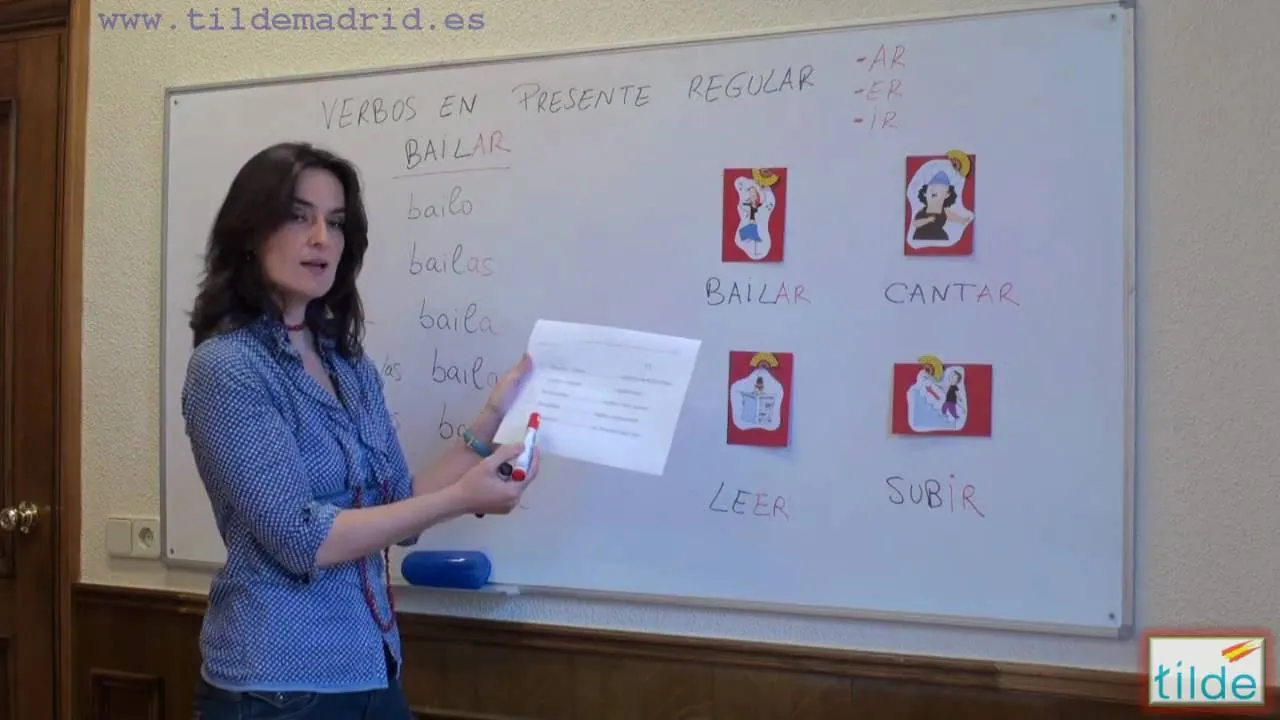
Learn the basics about the Spanish verbs in this free Spanish lesson brought to you by Tilde Madrid Spanish school in Madrid
Usually not: the ending already shows the person. Hablo español is enough; yo hablo español adds emphasis or contrast.
Most are, but some change their stem, such as pensar (pienso) or contar (cuento), and a few are irregular, such as estar (estoy) or dar (doy).
Put no before the verb: No trabajo los sábados.
Part of Spanish Sessions, the YouTube channel of the teachers at Tilde Madrid — more than 3 million views.
Watch on YouTube