Home / Video lessons / Verbos reflexivos
A verb is reflexive when the person who does the action also receives it: Me lavo las manos. This lesson explains how these verbs work and where their pronouns go.
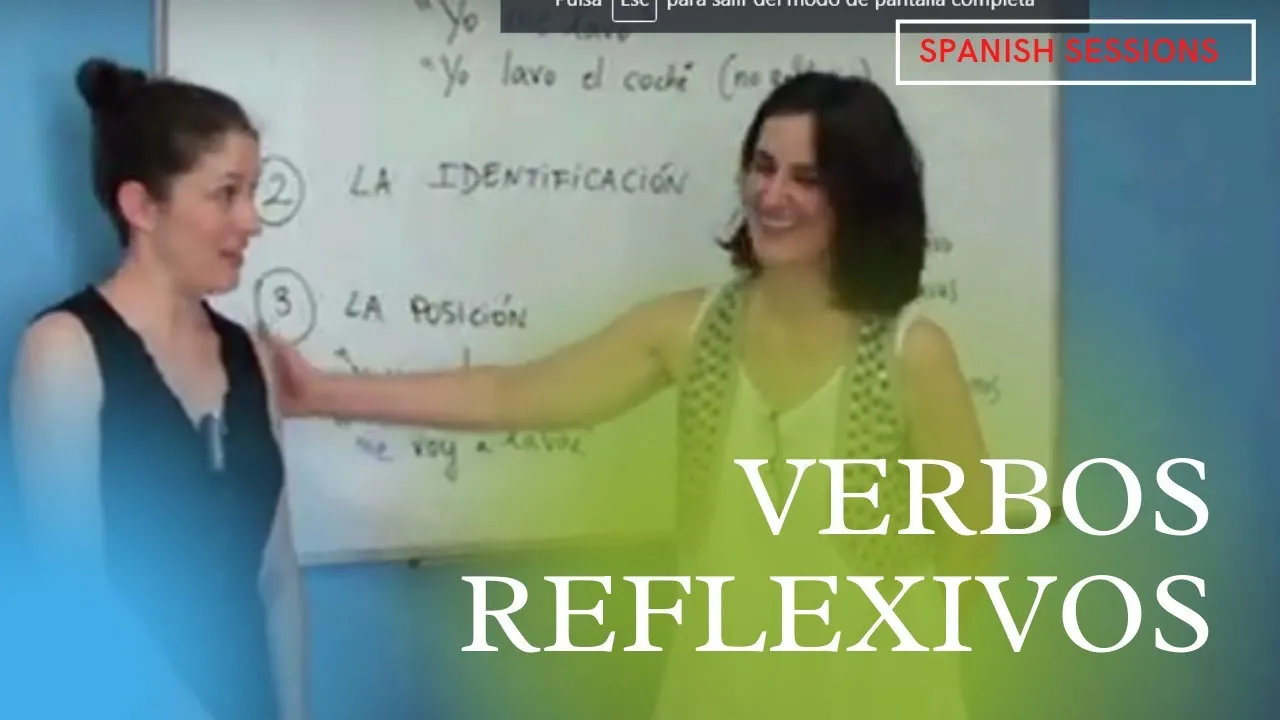
Learn to express actions using reflective verbs with this free Spanish lesson brought to you by Tilde Madrid Spanish school in Madrid.
With parts of the body and clothes, Spanish uses the article, because the reflexive pronoun already shows whose they are.
No. Ir is to go somewhere; irse is to leave: Me voy a casa. Many verbs change their meaning with se: dormir and dormirse, llamar and llamarse.
No. Some verbs always go with se, such as quejarse or arrepentirse, and se also has impersonal uses: Se habla español.
Part of Spanish Sessions, the YouTube channel of the teachers at Tilde Madrid — more than 3 million views.
Watch on YouTube