Home / Video lessons / Los verbos (II): el presente de los…
Second video of the series on Spanish verbs. Pilar explains the regular present tense of verbs ending in -er, such as comer, beber or aprender.
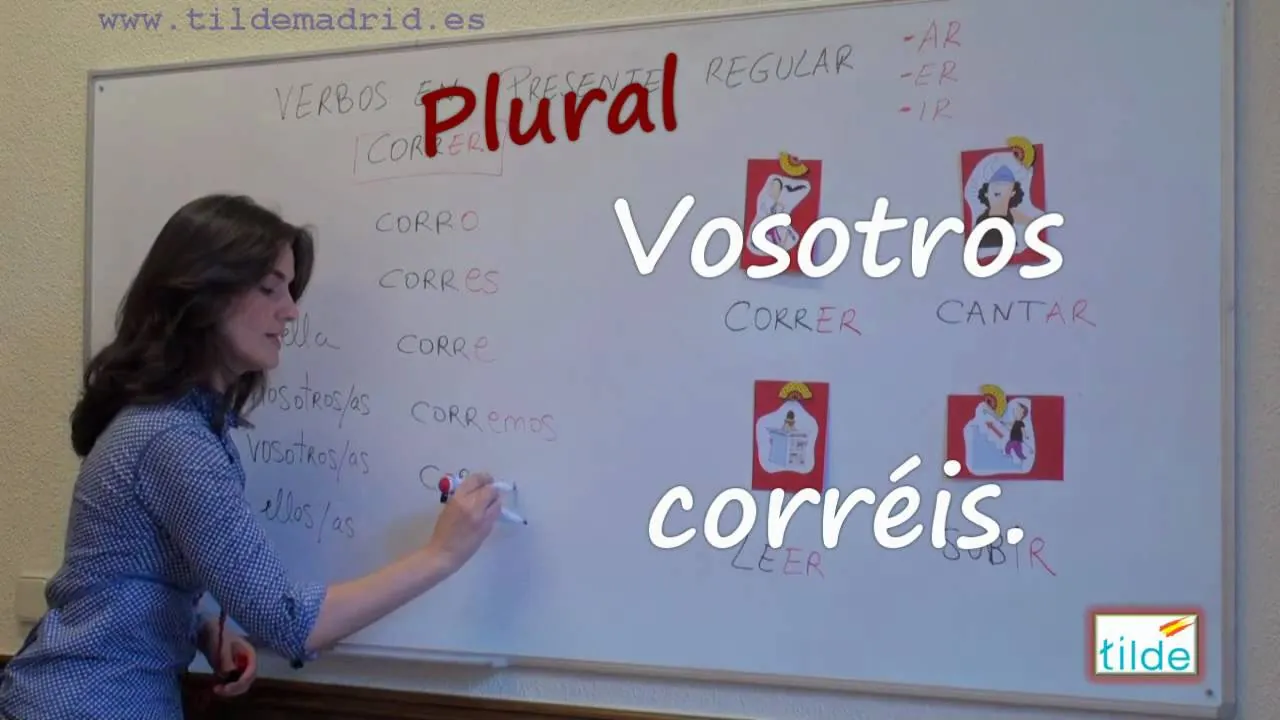
Learn the basics about the Spanish verbs in this free Spanish lesson brought to you by Tilde Madrid Spanish school in Madrid
Yes: leo, lees, lee, leemos, leéis, leen. It only has irregular forms in other tenses, for example in the gerund (leyendo).
No. Tener is irregular: tengo, tienes, tiene, tenemos, tenéis, tienen. Other frequent irregular -er verbs are hacer, poner, poder and querer.
Only vosotros: coméis, bebéis, aprendéis. The other persons have no written accent.
Part of Spanish Sessions, the YouTube channel of the teachers at Tilde Madrid — more than 3 million views.
Watch on YouTube