Home / Video lessons / Los verbos (III): el presente de los…
Third video of the series on Spanish verbs. Pilar explains the regular present tense of verbs ending in -ir, such as vivir, escribir or abrir.
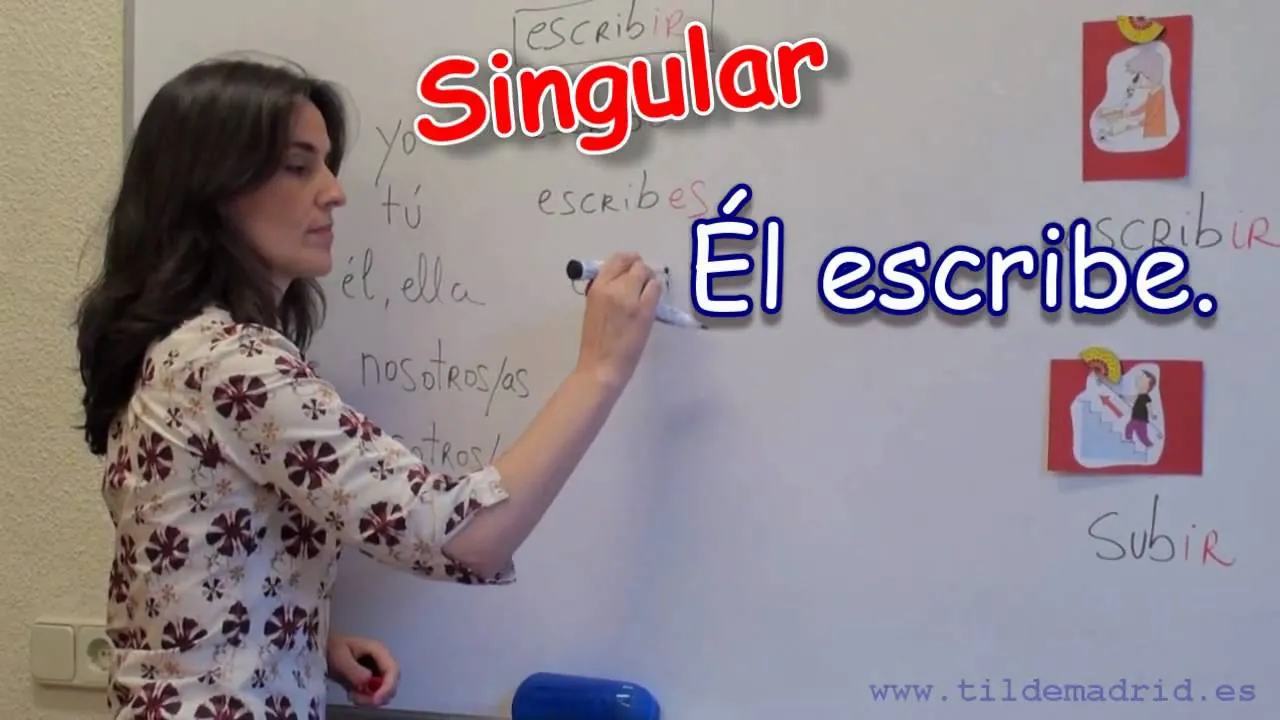
Learn the basics about the Spanish verbs in this free Spanish lesson brought to you by Tilde Madrid Spanish school in Madrid
Only nosotros and vosotros: comemos and coméis, but vivimos and vivís. The other forms have the same endings.
Yes, quite a few: pedir (pido), dormir (duermo), decir (digo), venir (vengo) or ir (voy).
Take a regular verb from each group, such as hablar, comer and vivir, and conjugate them side by side. Then use them in short sentences about your routine.
Part of Spanish Sessions, the YouTube channel of the teachers at Tilde Madrid — more than 3 million views.
Watch on YouTube