Home / Video lessons / Pretérito perfecto
Pilar introduces the pretérito perfecto with a short conversation with Lola about what they have done today. Then she explains how the tense is formed.
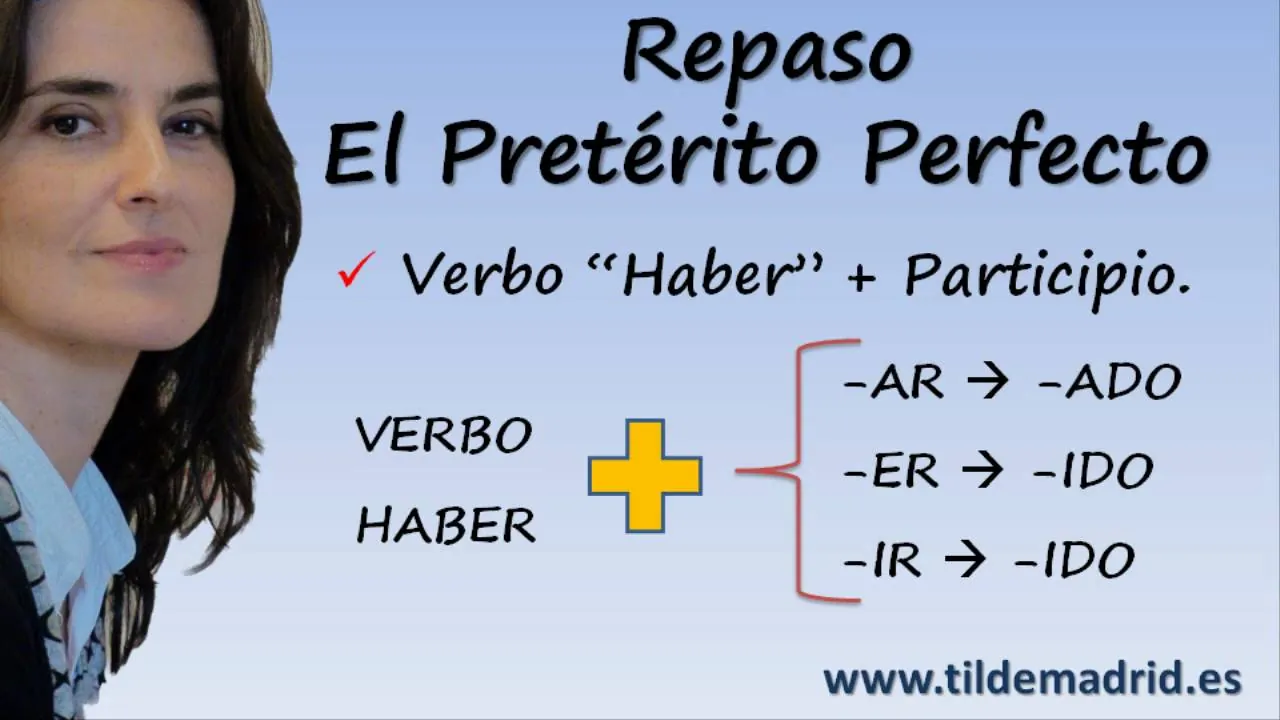
Talk about the past using this useful verb tense. All you need to know in this free Spanish lesson brought to you by Tilde Madrid Spanish school in Madrid
Very close, but in Spain the pretérito perfecto is used for any action that happened today, even when English uses the simple past: Esta mañana he desayunado pronto (This morning I had breakfast early).
Hecho (hacer), dicho (decir), visto (ver), escrito (escribir), puesto (poner), vuelto (volver), abierto (abrir) and roto (romper).
No. The two parts always go together: Ya he comido, not He ya comido. Pronouns go before haber: Lo he visto.
Part of Spanish Sessions, the YouTube channel of the teachers at Tilde Madrid — more than 3 million views.
Watch on YouTube