Home / Video lessons / El subjuntivo: introducción
Pilar introduces the subjunctive: what it is and when we need it. Then she practises with Milena, who has to find the subjunctive in several sentences and explain why it is used.
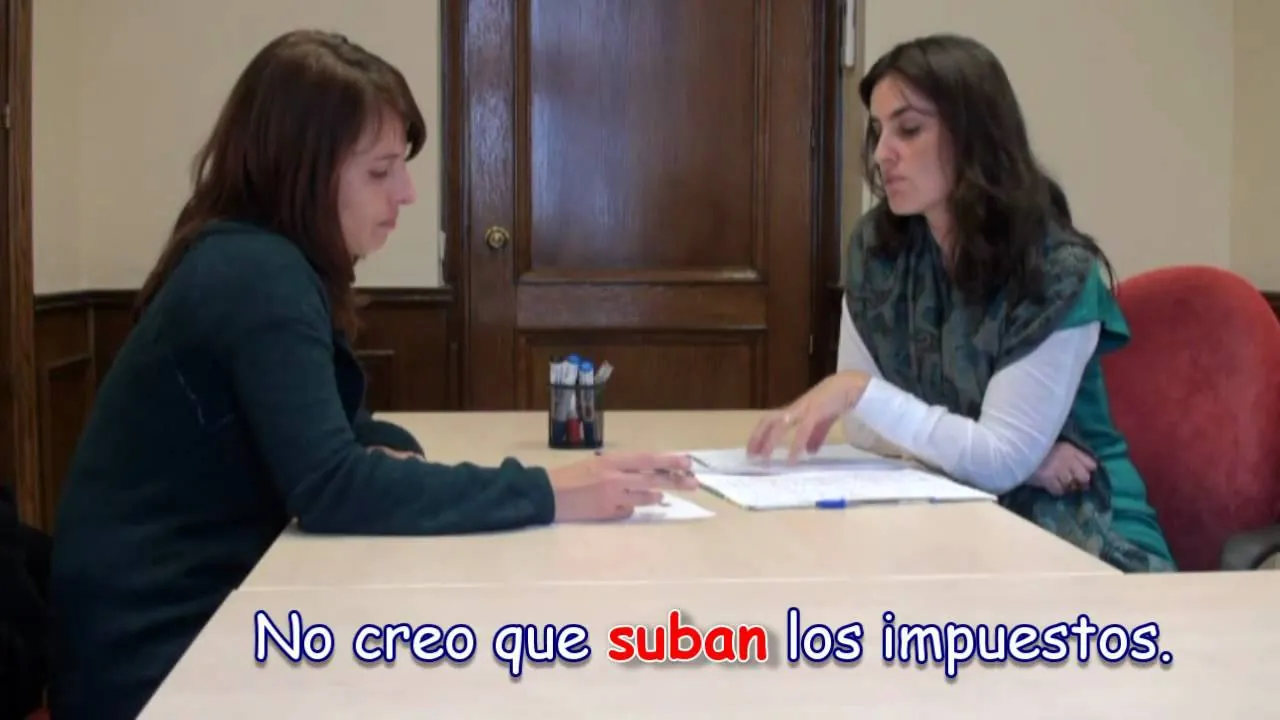
Do you know how to use this tense in Spanish? We will teach you that in this free Spanish lesson brought to you by Tilde Madrid Spanish school in Madrid
When there is only one subject, Spanish uses the infinitive (Quiero estudiar). With two different subjects, the second verb goes into the subjunctive (Quiero que tú estudies).
Yes. Expressions of feeling, positive or negative, take the subjunctive when there is a second subject: No me gusta que grites.
Only in a few formal structures (I suggest that he be on time). In Spanish it is part of everyday language, so it is worth learning step by step from intermediate level.
Part of Spanish Sessions, the YouTube channel of the teachers at Tilde Madrid — more than 3 million views.
Watch on YouTube