Home / Video lessons / Spanish for French speakers
Simone, from Switzerland, is a beginner in Spanish. She shares the difficulties she finds as a French speaker: the past tenses, masculine and feminine gender, false friends and the prepositions a and en.
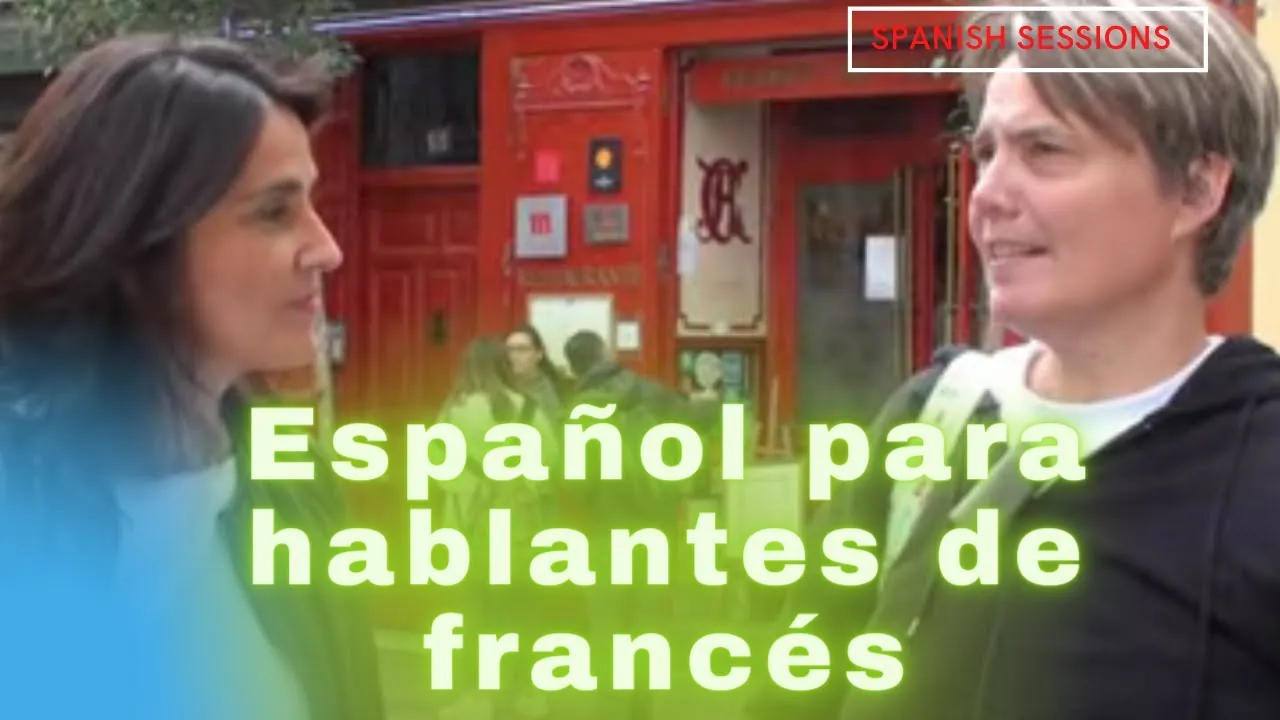
In the following videolesson our student Simone explains to us about the disadvantages of French-speaking students to learn Spanish. She comments on the different uses of past tenses, masculine and feminine gender, "falsos amigos" and the use of the prepositions "A" and "EN".
Because French uses à both for movement and for location. In Spanish, a is for movement (Voy a Madrid) and en for location (Vivo en Madrid).
Some common ones: el mar (la mer), la leche (le lait), el color (la couleur) and la sal (le sel).
In Spain, use the pretérito perfecto for periods that include the present (hoy, esta semana) and the indefinido for finished periods (ayer, el año pasado).
Part of Spanish Sessions, the YouTube channel of the teachers at Tilde Madrid — more than 3 million views.
Watch on YouTube